Choose the moment first
A successful portrait gift starts with a photograph the recipient will want to see repeatedly. That may be a candid family picture rather than a formal portrait. Choose a moment with a clear emotional connection, then check whether the image can work on the product you have in mind. A photograph that feels right on a large blanket may be too busy for a small ornament.
Look at the original file, not only a social media preview. Messaging apps and screenshots can reduce detail or bake in interface elements. If you have several versions of the photograph, send the version closest to the camera original and explain which person or feature matters most.
Inspect the face and the light
Enlarge the image until the eyes and the edge of the face are easy to inspect. If those details already look soft, a larger print cannot recover the missing information. Sharpening can change the appearance of an edge, but it does not create a reliable substitute for a clear source photograph.
Check for deep shadows across the face, strong highlights on skin and distracting reflections in glasses. A small bright background can pull attention away from the person. When two photos are equally meaningful, the one with simpler light and a cleaner background is often easier to place on a gift.
Match the crop to the object
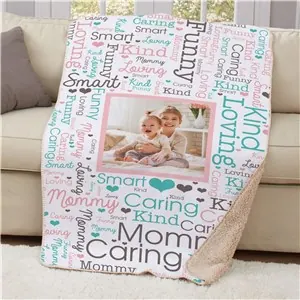
A portrait has to fit a physical print area. A tall face composition may work naturally in a vertical frame, while a wide family group may suit a wraparound mug or a rectangular blanket. Leave extra background around the subject so that the final crop can move without cutting into hair, shoulders or a pet’s ears.
Do not assume that the entire photograph will remain visible after cropping. Ask to see the exact product outline in the proof. On curved items, review where the face sits relative to a handle or edge. On shaped products, inspect narrow parts of the outline and the placement of any added name.
Give clear instructions with the upload
Include the person’s name exactly as it should appear, any date or message, and a short note about what must remain visible. If the photograph contains several people, identify the intended subject. Use a separate instruction for retouching or background changes so that the production team does not have to guess.
The final decision is the proof, viewed at a realistic size. Check spelling, crop, placement and color relationships together. Approve the photograph and the text as one composition before production begins.
Start the conversation.
Share a useful tip, ask a question or tell us what matters to you.